
Not the date to Celebrate: Sovereignty in our Stories
Warning: This article contains images of people who have passed away.
The History of January 26
Many people believe that the 26th of January was the date that Captain Cook arrived on the shores of Botany Bay. But the day actually marks when Arthur Phillip raised the British flag at Warrane (Sydney Cove) in 1788.
The Traditional Owners of Warrane (Sydney Cove) are the Gadigal People of the Eora Nation. No Aboriginal or Torres Strait Islander Nation has ceded sovereignty to the British nation. In order to claim ‘Australia’, the many Countries of this vast continent were labelled as ‘terra nullius’, meaning ‘land belonging to no one.’
This characterisation of Australia being a land belonging to no one meant that Aboriginal and Torres Strait Islander people and their diverse and unique Countries were called ‘flora and fauna’, and grouped together with plants and animals.
The genocide against Aboriginal and Torres Strait Islander people has been perpetrated through massacres, the implementation of missions, child removal, incarceration, forced labour, and political policies aimed at killing off Indigenous peoples along with their cultures, languages and ways of life.
This day can bring up trauma and heartache for a lot of mob around Australia.
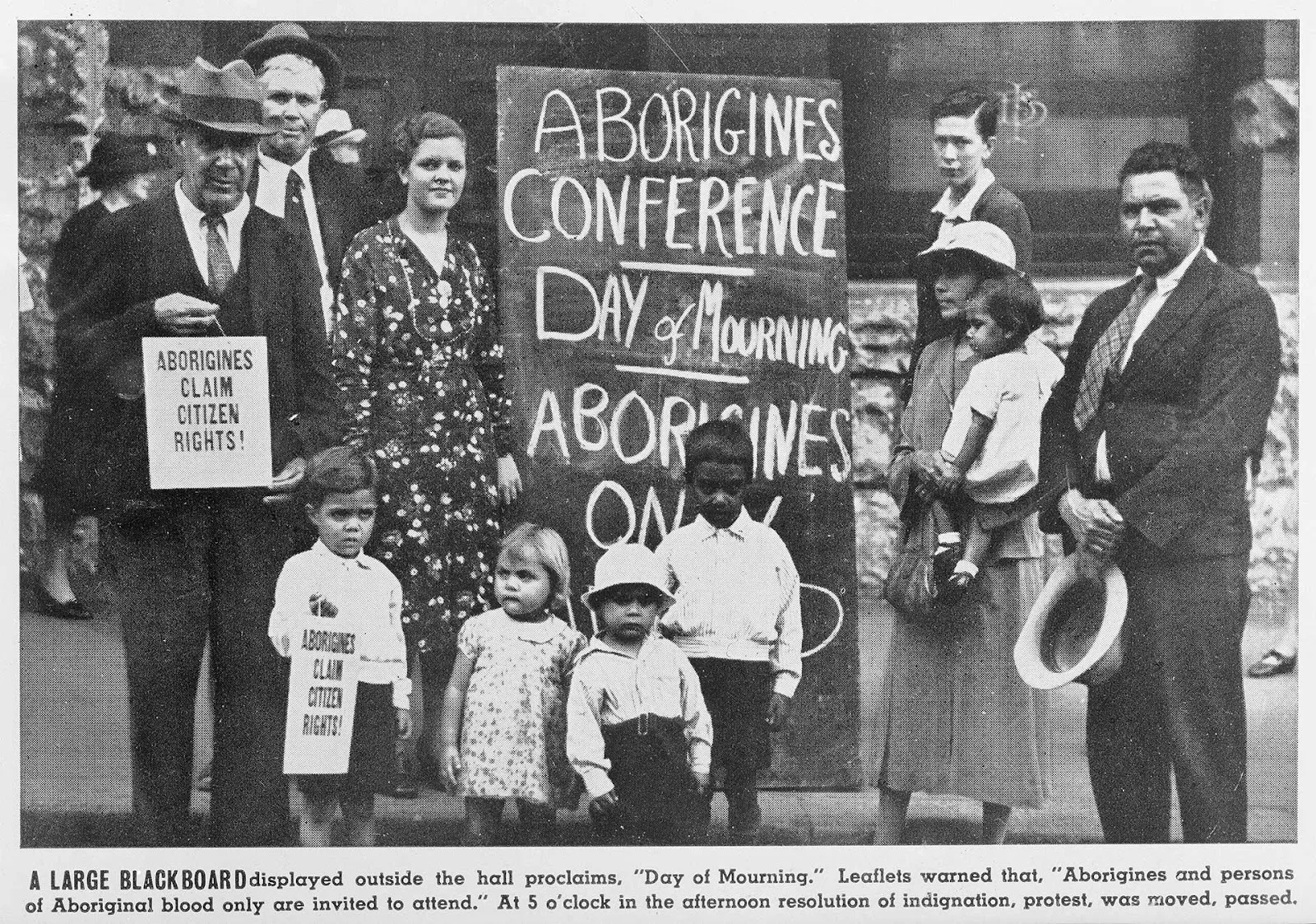
As a result of this, on the 26th of January 1938, this day was established by First Nations people as a national Day of Mourning - a day of protest against the unjust treatment of Aboriginal and Torres Strait Islander people for the previous 150 years.
“‘WE, representing THE ABORIGINES OF AUSTRALIA, assembled in conference at the Australian Hall, Sydney, on the 26th day of January, 1938, this being the 150th Anniversary of the Whiteman's seizure of our country, HEREBY MAKE PROTEST against the callous treatment of our people by the whitemen during the past 150 years, AND WE APPEAL to the Australian nation of today to make new laws for the education and care of Aborigines, we ask for a new policy which will raise our people TO FULL CITIZEN STATUS and EQUALITY WITHIN THE COMMUNITY.’” - Source: AIATSIS
January 26 was marked as a national celebration of Australian nationalism by the Howard government in 1994.
Today, many Aboriginal and Torres Strait Islander people call the 26th of January a Day of Mourning, Survival Day, or Invasion Day. Many come together to celebrate the survival of Aboriginal and Torres Strait Islander cultures and traditions, and the strength and resilience of the oldest continuous culture on earth.
Change the date campaign
There are a lot of activist groups around Australia who are encouraging people to not celebrate Australian nationalism on January 26.
“It is a day of survival for First Nations people, and for many, a placeholder that highlights the ongoing colonial violence that continues to manifest throughout this country. The debate that arises around Jan 26 underlines ignorance and the lack of awareness and empathy present in Australia.” says Clothing the Gaps.
Connecting up on January 26

Every year, the ILF is proud to support Yabun Festival in Sydney.
While the ILF is a national charity supporting remote Communities, our main office and many of our staff live in and around Sydney.
Therefore, Yabun is an important opportunity for us to show up for our Sydney Community and support First Nations people in the city many of us are based.
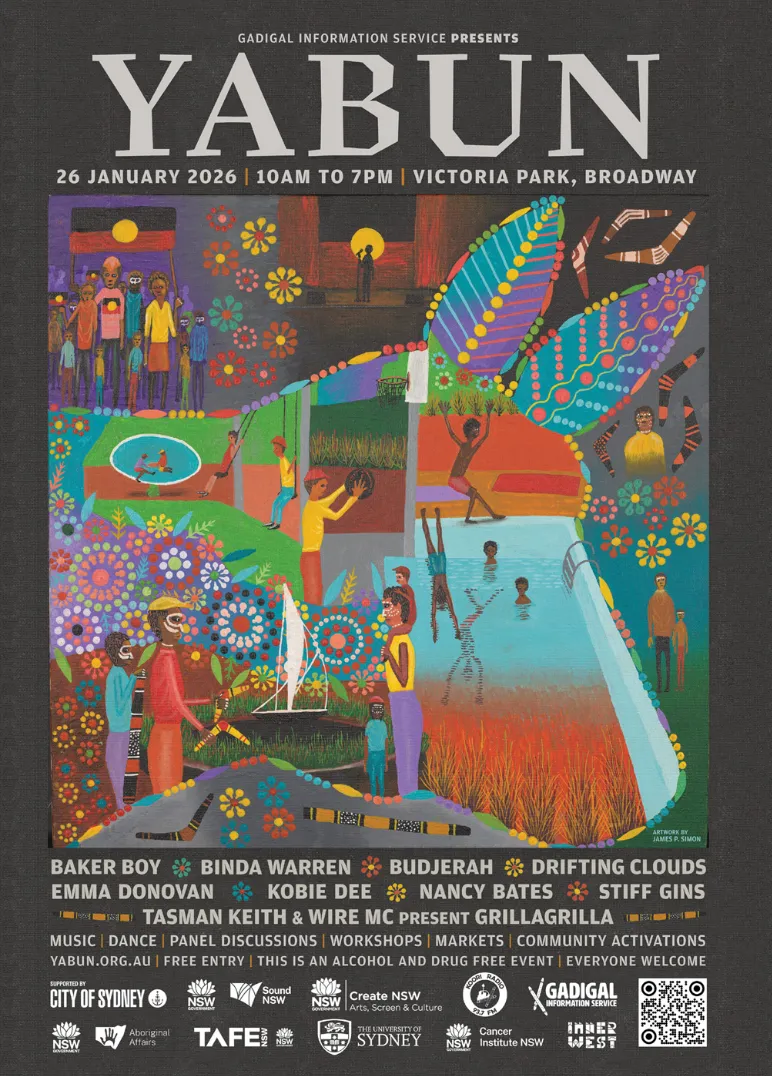
Yabun is a family-friendly Community event in the heart of Sydney.
We encourage those who can to come along, support local businesses, spend time with Community and celebrate Aboriginal and Torres Strait Islander excellence.
Events around Australia
All around Australia, people who support First Nations Communities will be coming together to have ceremonies, march, sing, reflect, and be around Community.
Check out this extensive list of protests, festivals, dawn services and more throughout the country.

If you can’t attend a local event, you can still celebrate Aboriginal and Torres Strait Islander peoples’ stories, cultures and languages on January 26, and beyond.
Here are some recommendations for ways to engage, learn, connect and reflect.
Incorporating Indigenous knowledge in your teaching
It is important for Australians to incorporate Indigenous ways of knowing into teaching all year round. This is always worthwhile.
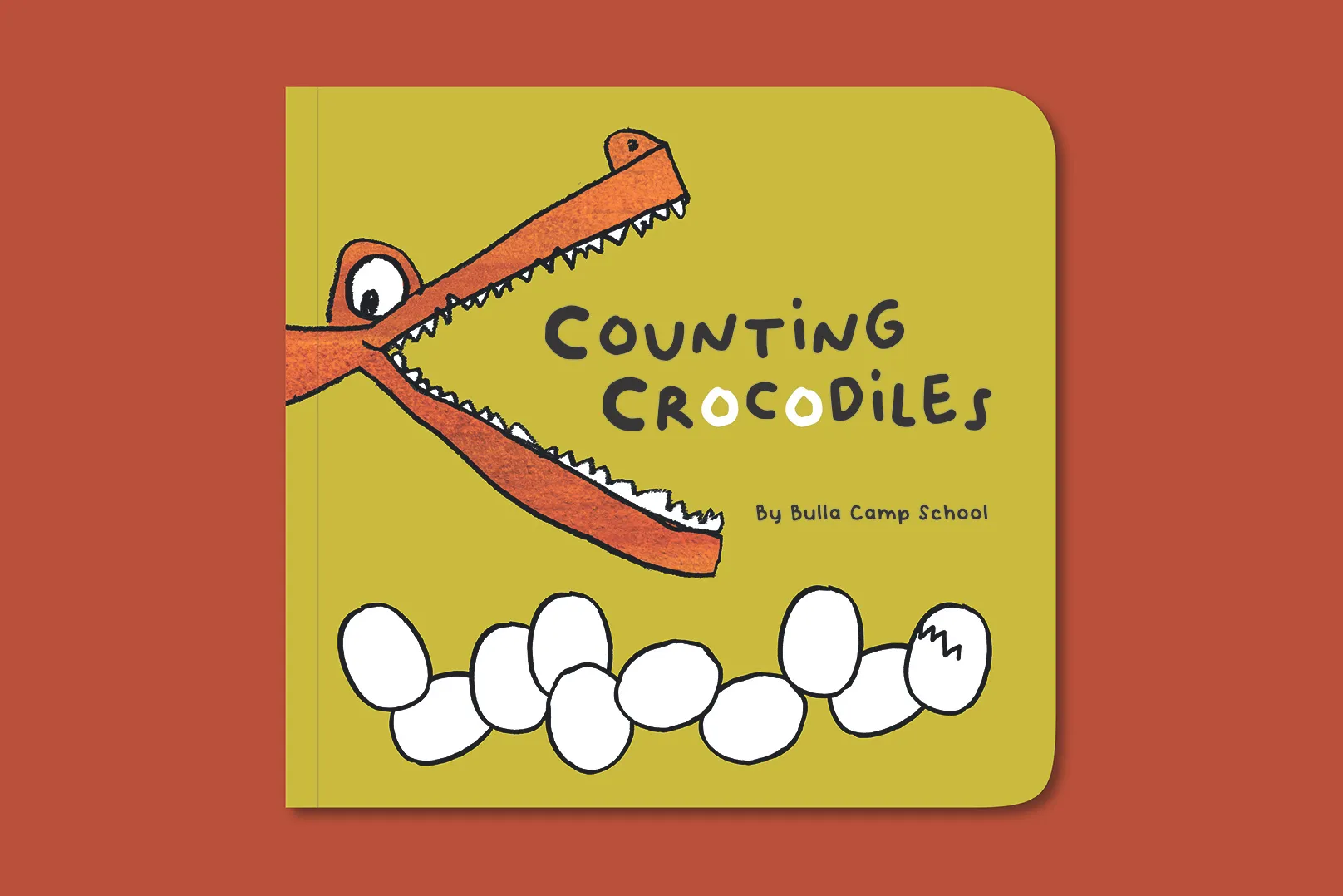
The ILF has a range of resources available for teachers and schools, including the Indigenous Literacy Day annual FILMs, the Country Tells Us When… Teacher Resources by ILF Ambassador Shelley Ware, ILF books, and more resources on our website.
You can also thoughtfully engage with our books by reading the Teacher Resources by ILF Ambassador Shelley Ware for, ngayawanj bagan-nggul, ngayawanj barra barra-nggul (we belong to the land, we belong to the sea), bagan, barra barra, mirriwarr (The Boys Who Found Their Way), and Yaltji Ngayuku Papa? (Where is my Dog?). These books are written and illustrated by remote Communities and celebrate Country, Culture, and Community life.
You should also check out
Read, listen, watch


- In My Blood It Runs film, children’s book, and website
- Ngalu Warrawi Marri Film Series by the Australian Museum
- First Inventors
- Black Comedy
- The Sapphires
- Preppers
- Incarceration Nation
- A Real History of Aboriginal Australians, the First Agriculturalists | Bruce Pascoe
- Occupation: Native
- The Last Daughter

- Country Tells Us When… by Tsheena Cooper, Mary Dann, Daliasa Pigram-Ross and Sharee Ford
- We Look, We Find by Women and Children from the Napranum Community
- Shordi Krik by Students from Barunga School with Justine Clarke
- Tiwi Seasons with Marius by Tiwi College with Shelley Ware and David Lawrence
- Winthali by Joe Willigan Ross, Stacey Bush, Remi Nyandat Ross and Boheme Baiana Ross
- In My Blood it Runs by Dujuan Hoosan, Margaret Anderson and Carol Turner
- Etta and the Shadow Taboo by J.M. Field and Jeremy Worrall
- Back on Country by Adam Goodes and Ellie Laing
- A Footy Tail by Alex Johnston and illustrated by ILF Ambassador Gregg Dreise
- Little J and Big Cuz: The Stormy Night by Adam Thompson and Tony Thorne

- Murli la - Song and Stories of the Tiwi Islands by Ngarukuruwala Women’s Group
- Growing up Aboriginal in Australia by Anita Heiss
- Growing Up Torres Strait Islander in Australia by Samantha Faulkner
- Dropbear by Evelyn Araleun
- Dark Emu by Bruce Pascoe
- Australia Day by Stan Grant
- Sister Girl by Jackie Huggins
- Songlines: The Power and Promise (First Knowledges) by Margo Neale and Lynne Kelly
- Another Day in the Colony by Chelsea Watego

- Sister Brother - Archie Roach
- Milkumana - King Stingray
- Better in Blak - Thelma Plum
- Better Days - Bakery Boy, Dallas Woods, Sampa the Great Neon Moon - Miiesha, The Woorabina Singers
- Island Home - Christine Anu
- Barkaa - Preach
- Jessica Mauboy - Yours Forever album
At the ILF, every book we publish highlights the importance of Sovereignty in Storytelling. As the First Storytellers, scientists and the oldest continuous culture around the world, our histories are your histories.
Be part of the story. Every dollar raised, every ILF book purchased, goes towards Aboriginal and Torres Strait Islander Storytellers and their Communities.

Fight for Sovereignty in Stories by donating, hosting an ILF fundraiser, speaking to your work about supporting ILF, or buying books from the ILF shop.
Whatever way you engage with January 26, make sure that culture, inclusion, and connection are centred.
.webp)