
Tiwi War Kwampini, Footprints in the Sand – Commemorating Tiwi Contribution to WWII
Disclaimer: Please be advised that this story contains images and names of people who have passed away, provided with permission of their families.
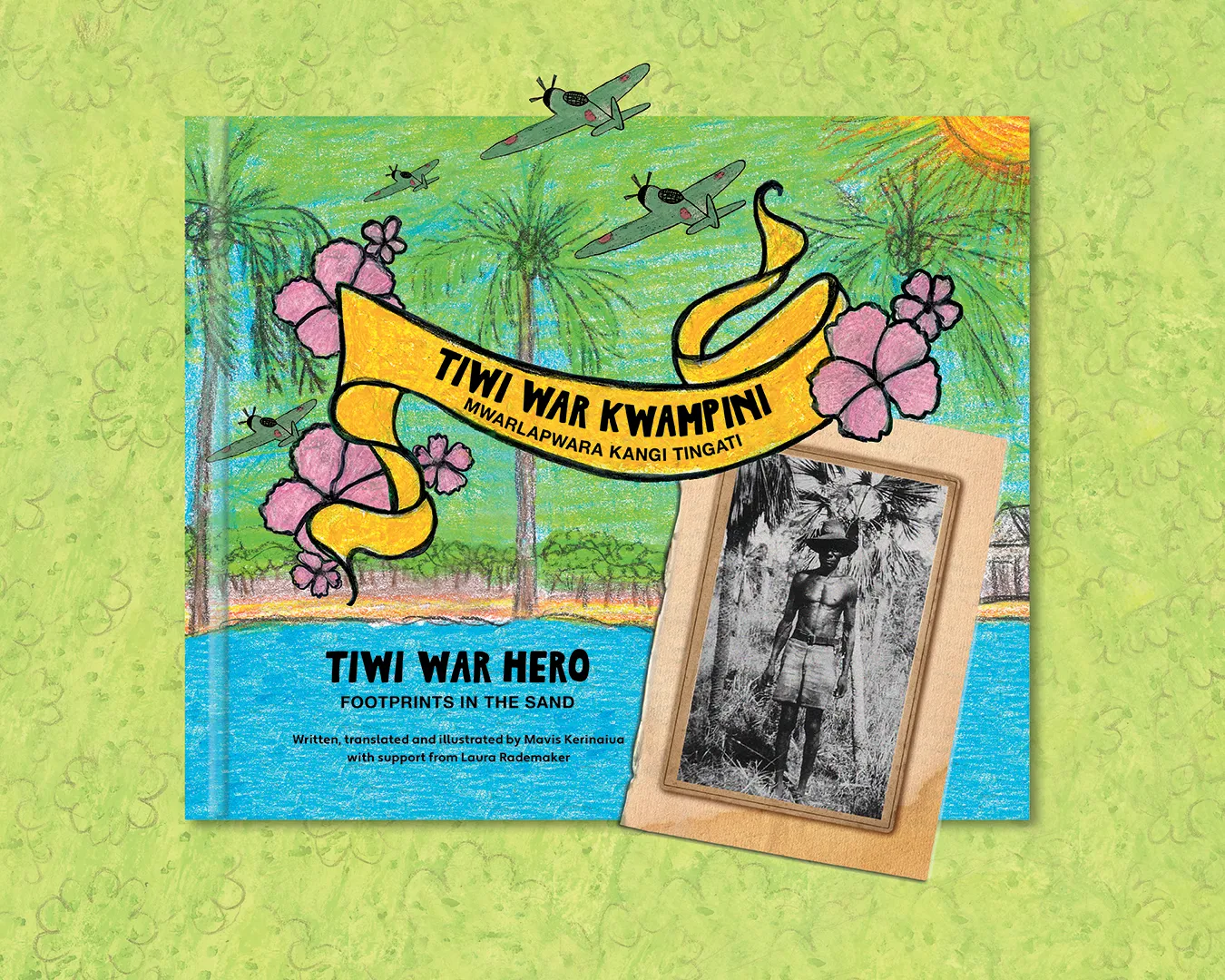
Mavis Kerinaiva’s new book, published by the Indigenous Literacy Foundation, is titled Tiwi War Kwampini, Mwarlapwara Kangi Tingati (Tiwi War Hero, Footsteps in the Sand).
“The story is about bravery, courage and as a collective group, how we worked together to look after Country and people. And how proud we are as Tiwi people and as Australians,” says Mavis.
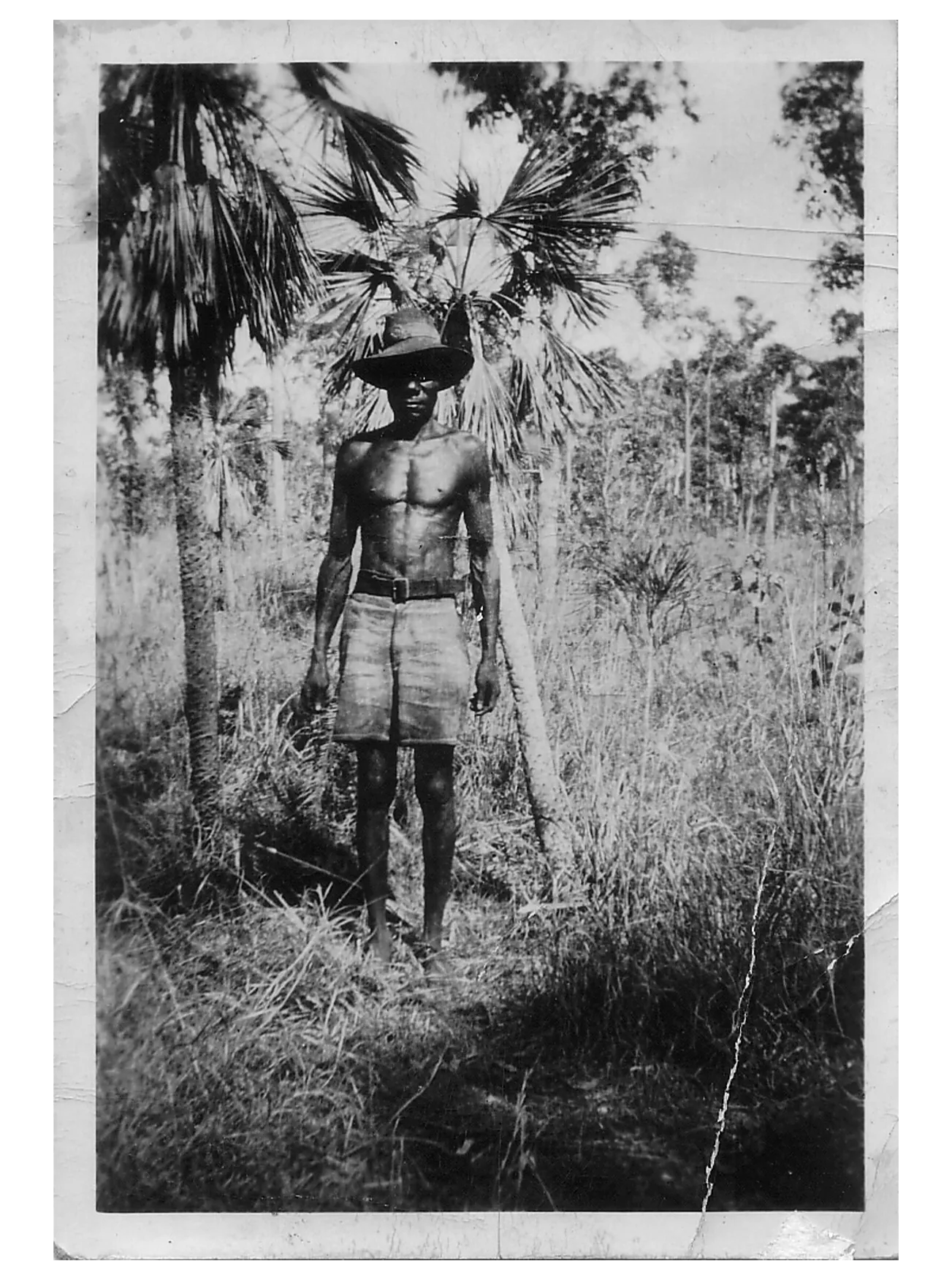
Tiwi War Kwampini is a story about Louie Purraputimali Munkara, Mavis’ grandfather, who was pivotal in the protection of Darwin during World War II.
“Before the Japanese bombed Darwin in World War II, they attacked my grandfather’s Country. Not many people outside of the Tiwi Islands know about my people’s role in the war. This is the story of one of our war heroes, my grandfather Louie Purraputimali Munkara.”
This beautiful picture book showcases the lands, language, and peoples of the Tiwi Islands. The story is in both English and Tiwi, and shares lore and knowledge that have been passed down for generations.
Role of the Tiwi people in World War II
It is well-documented, although sometimes overlooked, that the Tiwi Community played a vital role in the protection of Australia in World War II.
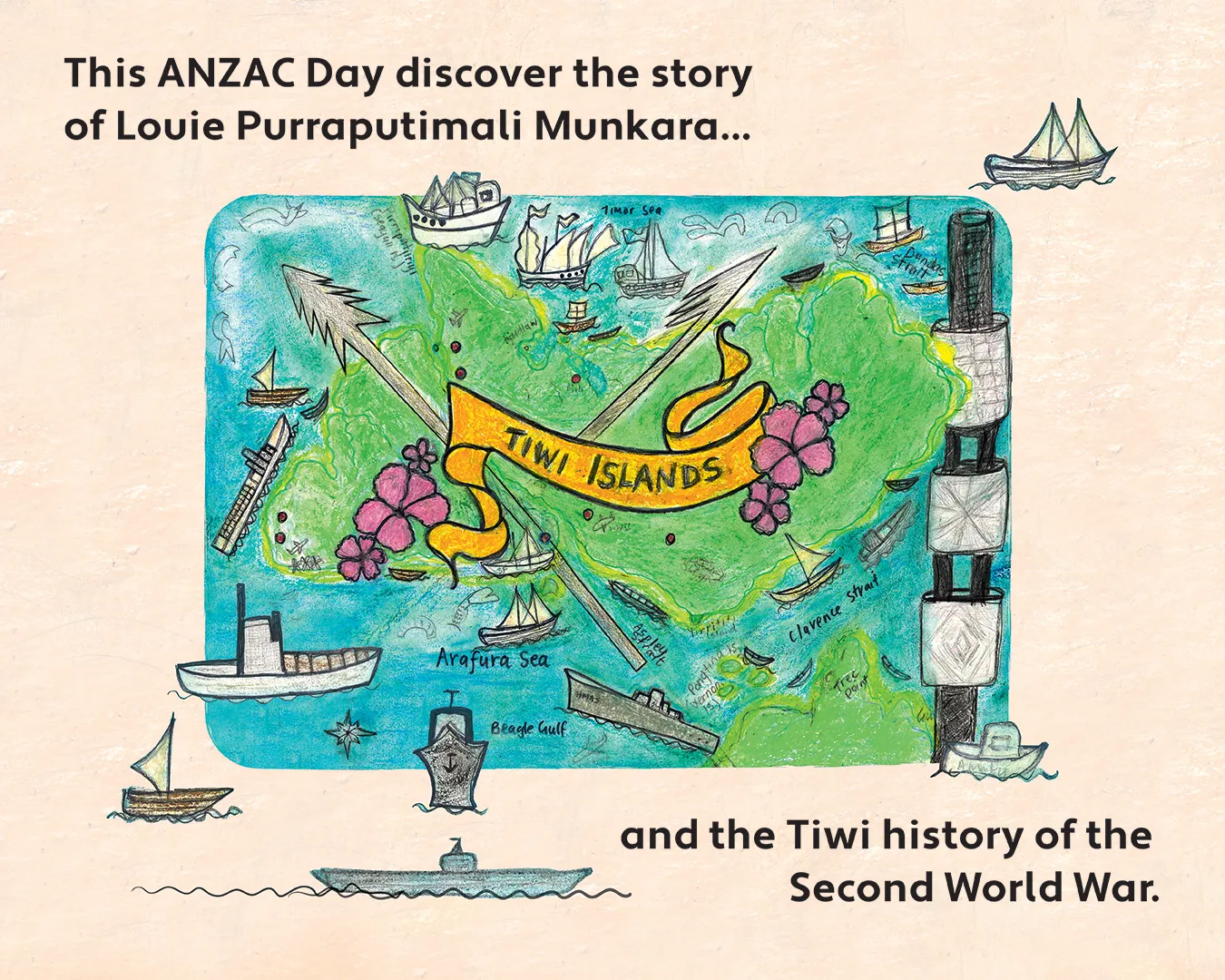
Mavis’ book is about her grandfather’s role in the Black Diggers, contributing to the patrol of Tiwi – the northern islands near Darwin. The book also teaches readers about the bombing of Nguiu Mission and Darwin, shipwrecks that occurred on the coast of Tiwi, and how Tiwi people patrolled and protected Australia’s coast.

Mavis explains that this story has always been known by the Tiwi people. Her hope in memorialising the story into a book is to ensure that Tiwi children are continuously told this story, that Australians all over the country can learn about the role the Tiwi people played in World War II, and so that people all over the world can know this story for truth-telling and healing.
“We want to share the story with a lot of people, as much as we can. We want this as a healing process, to have this partnership with those people that lost their family in the war. For the survivors, family, living relatives. So they know where their family is, for example, where they were buried. We have to pay homage and respect to the people they lost during the war,” explains Mavis.

Showcasing the lands and peoples of Tiwi through beautiful illustrations
The book weaves together truth-telling with beautiful illustrations that depict the landscape of the Tiwi Islands.
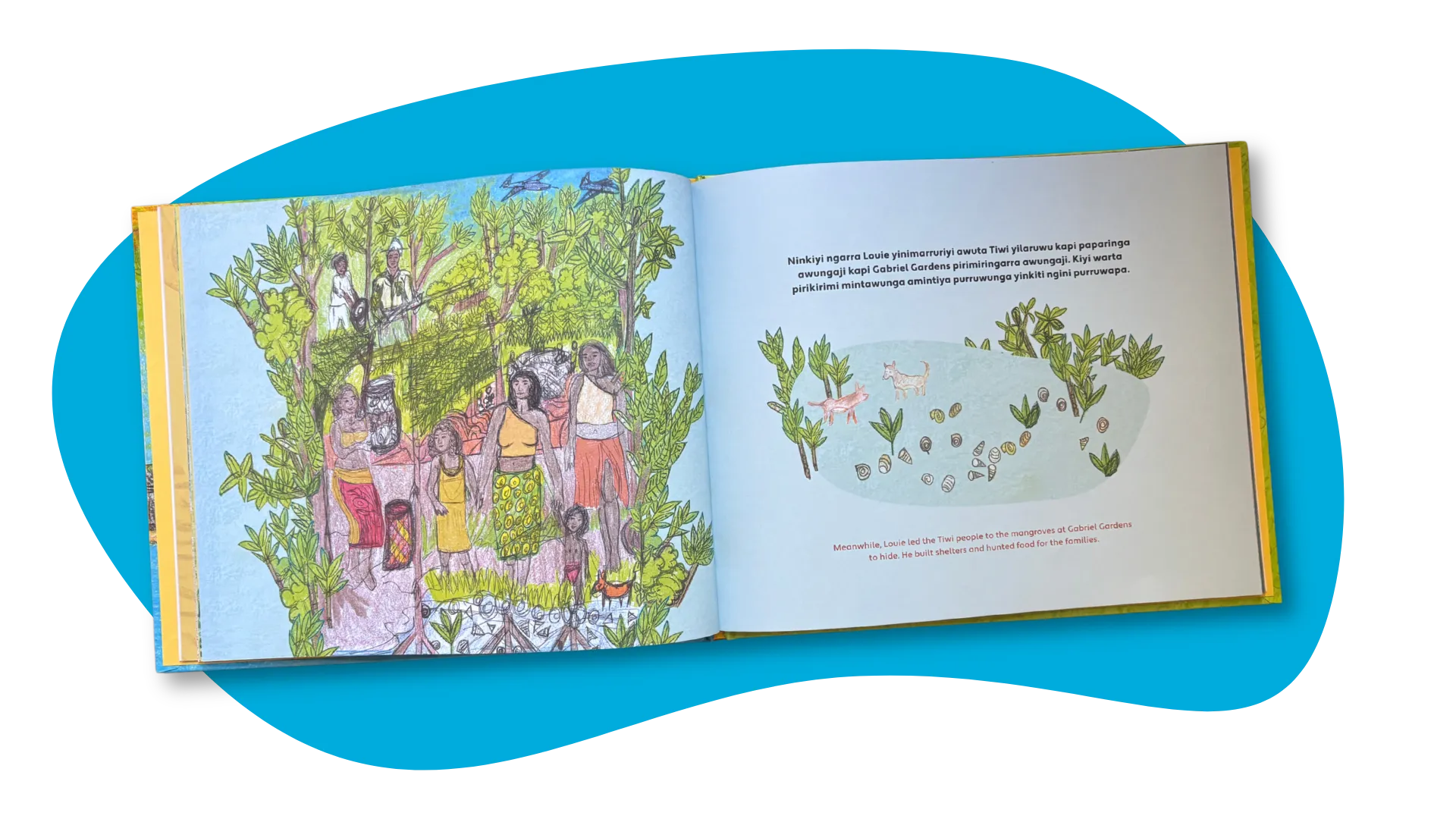
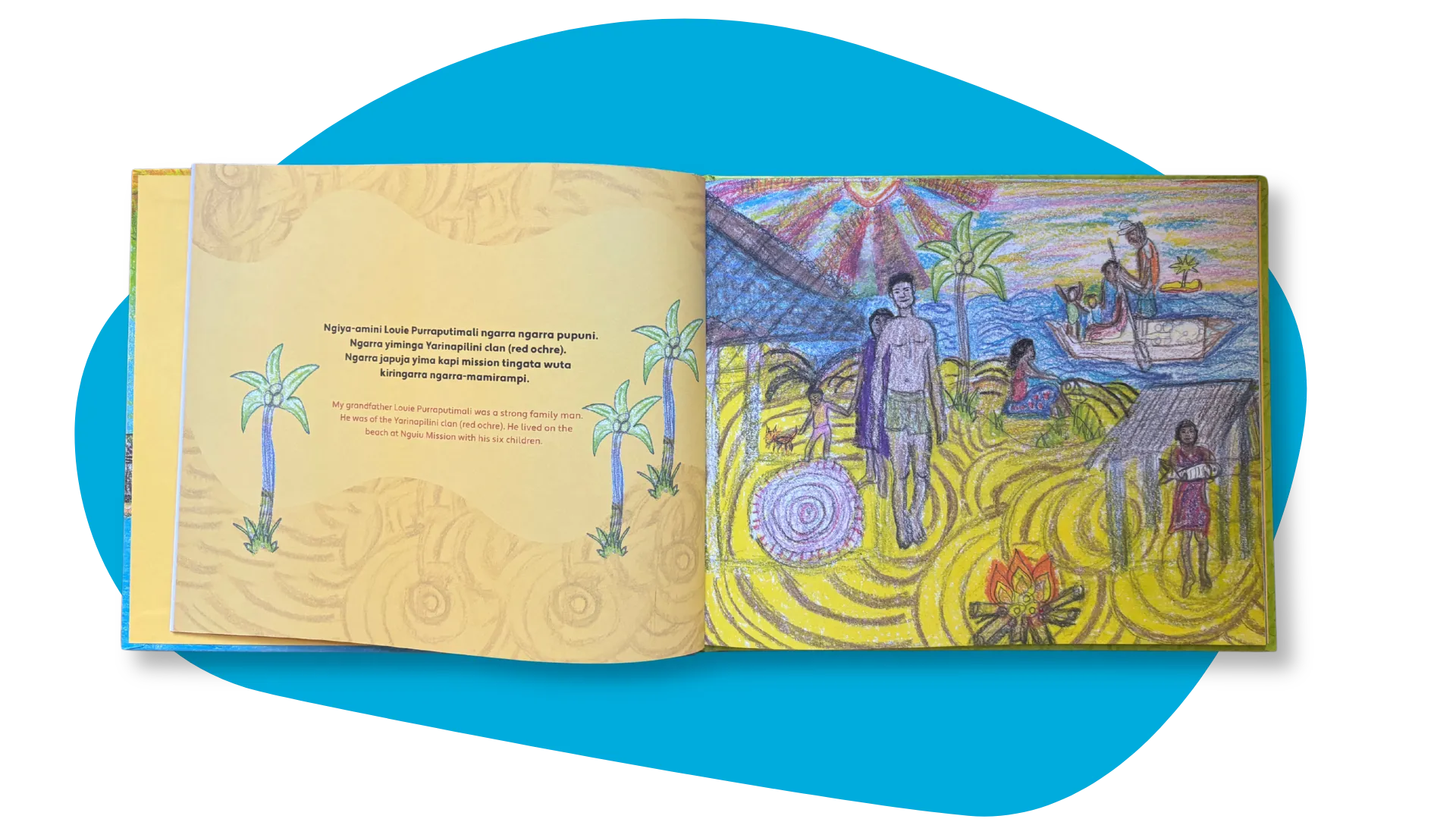
Mavis’ process in illustrating this story was to imagine the days Louie and her family lived on the Mission.
“I illustrated the book by envisioning what it will be like those days, the landscape and what my grandfather would have done. Because it's my home, my Country, so I thought of having the places in there, like the cliffs and the rocks and trees, the sky, the colors.”
Illustrations always play an incredibly important role in children’s books. For Tiwi children, this text is familiar, showcasing their Countries and encouraging reading. For children in different Communities and cities, it celebrates and educates them about the lands, seas and skies of the Tiwi Islands.
“I wanted to put the colors in there so people can enjoy and see how beautiful our island is.”
This project was also supported by Laura Rademaker from the Australian National University through their 'Beyond Reconciliation: Truth-Telling for Indigenous Wellbeing' and the Australian Research Council.

A dedication to her family and Country
Louie Purraputimali Munkara had 6 children, 1 of them being Mavis’ mother. Mavis has dedicated this story to her mother – “Nyurratuwu Ruth Pakiliyanuwu” meaning “For Ruth”.
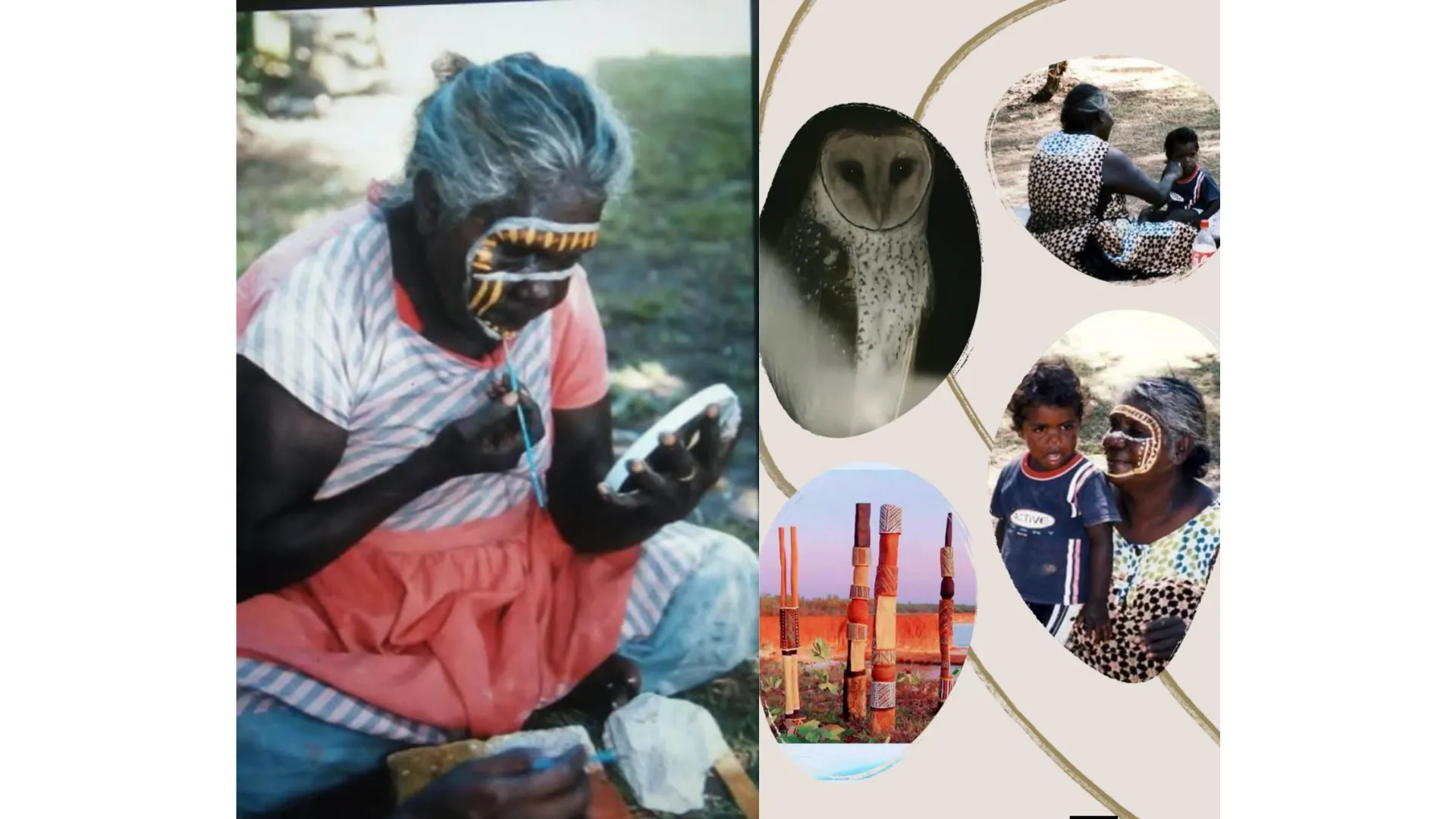
“I think that was the important story that was told to us as children growing up. And we felt so proud and honored that our grandfather was part of this and other family members too,” says Mavis.
“He would be happy that his story still continues 83 years later. For my mum, too, and her sisters and their family, it's really, really a happy time to talk about and to bring this to life in this book. [Louie] died in 1963. It's a privilege that we know grandpa has contributed so much to the war effort.”
Mavis also believes that this book will be a good reminder to all the families in Tiwi to be leaders. A reminder, she explains “for us to continue to take on his leadership role, to look after our Country.”
In Tiwi, the book says: “Wuta paparliwi purrumwari nanki mwarlapwara ngini ngapapuruka wutawa ngirramini ngini putuwurupura.” This translates to “Our ancestors left footprints for us to follow their ways.”
Commemorating the story into a book
To Mavis, this book “supports the future generation as part of our data collection, knowledge keeping, and truth telling about history and our people and the war effort. And those days they didn't have money and they didn’t get paid for that, it was just from the heart. It’s important to remember their dedication for people and Country, how proud they were to protect the land.”
Mavis hopes to work with more families in the Tiwi Islands to create more books about the war, more books about times on the Mission, and also creational Dreaming stories.
“We need more books like this for the children. The war effort is very important because it happened, and we wouldn't be here without those heroes. Having grandpa and Matthias [Ulungura, another war hero] looking after the people and the Country, it is very, very important to remember them”
“My aminayi (grandfather) is my champion, my unsung kwapini (hero). We acknowledge and pay our deepest respects to the Tiwi and those of all nations who lost loved ones in the Second World War. May they rest in eternal peace. We remember all who lost their lives, those who served and those whose lives were changed by war.
Lest we forget. Peace to all. Farewell. Pongki (peace)."
.webp)